Stars Align
An AI-assisted fashion and footwear experience
An AI-assisted fashion and footwear experience combining product discovery, an AI stylist, visual analysis, outfit upload, digital wardrobe tools, and a shoppable catalog.
- Status
- Functional Prototype
- Category
- CONSUMER
- Year
- 2025
- Primary stack
- Next.jsTypeScriptSupabase
- Demo
- ENTER THE BUILD
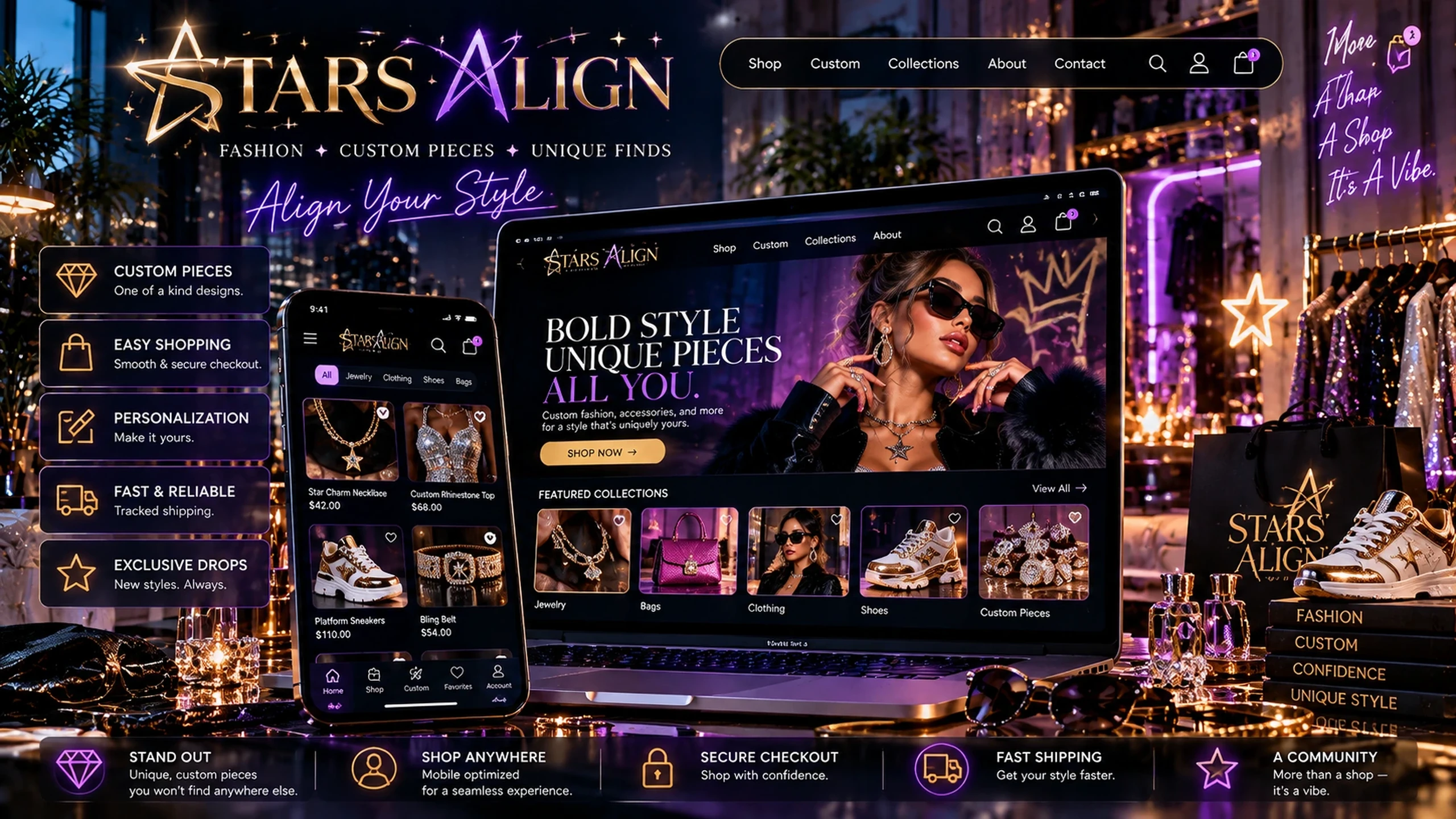
Project visualization — a designed representation, not a literal screenshot
01Overview
What this is
An AI-assisted fashion and footwear experience combining product discovery, an AI stylist, visual analysis, outfit upload, digital wardrobe tools, and a shoppable catalog.
Explores
- AI stylist
- Outfit analysis
- Shoe recommendations
- Digital closet
- Favorites
- Comparison
- Camera input
- Outfit upload
- Product catalog
- Custom product experiences
- Responsive consumer UX
02Explore the build
The demo and the build insight
The demo
External application
ENTER THE BUILD
The public Stars Align build — AI stylist, outfit analysis, and the shoppable catalog, live on Vercel.
ENTER THE BUILDBuild insight
- Current build
- Functional Prototype
- Architecture and features below are the real build.
- Demo
- External
- Launch control above opens the verified public build.
Build insight — real project data, not a live application.
Recommendations and visual analysis share a structured domain around products and outfits. The catalog is the source of truth for anything shoppable; the AI layer produces structured styling output rather than free-form prose, so the experience stays grounded in real products.
03Problem · opportunity
What it sets out to solve
Online shopping for fashion and footwear is still a search-and-scroll problem. Personal styling guidance, outfit coordination, and a sense of what you already own are rarely part of the same experience as the store.
04Concept
The core idea
Merge the store with a styling layer: upload outfits or a closet, get visual analysis and shoe recommendations, save favorites, compare options, and buy — with the product catalog driving every suggestion so recommendations are always shoppable.
05What I built
What's actually in the code
A functional prototype: consumer-facing discovery and wardrobe flows with an AI stylist, outfit analysis, shoe recommendations, favorites, comparison, camera/upload input, and a responsive shopping experience. Legacy project naming referenced “Aries World of Shoes” internally; the public brand is Stars Align.
Approach
Building the experience around a product catalog plus an AI styling layer. Camera and upload inputs feed visual analysis; a digital closet stores what you own; favorites and comparison support decisions; and the catalog converts all of it into commerce.
06Key features
What's implemented today
- AI stylist that recommends against an actual product catalog so suggestions are purchasable
- Outfit upload and camera input feeding visual analysis
- Digital closet storing items you already own
- Favorites and side-by-side comparison
- Shoppable catalog and custom product surfaces
- Polished, responsive consumer interface
07Architecture
How it's structured
Recommendations and visual analysis share a structured domain around products and outfits. The catalog is the source of truth for anything shoppable; the AI layer produces structured styling output rather than free-form prose, so the experience stays grounded in real products.
Design notes
Visual analysis is treated as a capability that must degrade gracefully: when certainty is low, the experience surfaces more conservative recommendations and options to refine input.
08Technology
The stack
- Next.js
- TypeScript
- Supabase
- Tailwind CSS
- AI (structured analysis)
09Challenges · lessons
Where it got hard, and what it taught me
Challenges
- Keeping AI styling suggestions grounded in what the catalog can actually sell
- Designing upload/camera flows that feel native on mobile
- Separating the legacy internal brand from the public Stars Align identity
Learnings
- Commerce credibility depends on the recommendation layer being traceable back to real products
- Wardrobe and closet concepts make recommendations feel personal without requiring heavy user data
- A strong consumer UI is the differentiator — AI adds value only when the interaction is delightful
10Current status
Where this project sits today
Core features are engineered and demonstrable. Not yet production-hardened or deployed to real users.
Demonstrated
- Functional prototype with working discovery, stylist, closet, and comparison flows
11What comes next
Where this goes from here
- 01Deepen the digital wardrobe features and outfit coordination
- 02Expand the catalog and custom product experiences
- 03Harden the AI-analysis flows for real uploads at scale